What exactly is an autoresponder? Definition, Advantages, Types
People anticipate rapid responses from businesses in the modern digital age. Normally, a person who subscribes to an email list, downloads a guide, creates an account, makes an order, or gets in touch with a firm anticipate receiving some form of confirmation or follow-up.
However, it might take a lot of time to respond to each individual by hand.
An autoresponder is beneficial in this situation.
After a certain occurrence or action, an autoresponder is a tool that automatically sends a message that has already been written. Rather than writing and sending the same answer repeatedly, you can utilize automation to manage the distribution after creating the message once.
Email marketing is typically linked to autoresponders, but the concept may also be applied to other sorts of communication, such as customer notifications, onboarding, support acknowledgements, and text messages.
The concept is straightforward for beginners: someone takes action, a specific trigger is activated, and the system automatically sends a message that is appropriate for the situation.
We'll define what an autoresponder is, how it functions, its main advantages, typical kinds, useful applications, and how to create a successful autoresponder strategy in this manual.
However, it might take a lot of time to respond to each individual by hand.
An autoresponder is beneficial in this situation.
After a certain occurrence or action, an autoresponder is a tool that automatically sends a message that has already been written. Rather than writing and sending the same answer repeatedly, you can utilize automation to manage the distribution after creating the message once.
Email marketing is typically linked to autoresponders, but the concept may also be applied to other sorts of communication, such as customer notifications, onboarding, support acknowledgements, and text messages.
The concept is straightforward for beginners: someone takes action, a specific trigger is activated, and the system automatically sends a message that is appropriate for the situation.
We'll define what an autoresponder is, how it functions, its main advantages, typical kinds, useful applications, and how to create a successful autoresponder strategy in this manual.
What is an autoresponder?
A communication system that is automated and delivers a message when a certain trigger or event occurs is called an autoresponder.
Consider a visitor to your website who signs up for your newsletter. Upon subscribing, they instantly receive an email stating:
I appreciate you being a part of our group. Here's the complimentary guide you wanted.
Someone from your team did not necessarily need to be in front of a computer to send that email. Instead, the email marketing system recognized the subscription and delivered the proper message automatically.
Numerous circumstances can benefit from the same idea.
After making a purchase, a consumer may get an order confirmation. A welcome email may be sent to a new subscriber. Someone who downloads an ebook could receive further educational materials in a few days.
The crucial thing is that the message is sent when certain situations or actions occur.
As a result, an autoresponder may be seen as a straightforward "if this occurs, send that message" mechanism.
If someone signs up for my newsletter,
then give them a welcome email.
Alternatively:
Should someone acquire an item?
after that, mail an order confirmation.
Additional conditions, delays, and follow-up communications can be included in more sophisticated automation systems.
The fundamental procedure is simple to grasp, even though automated marketing platforms may grow very complex.
Four crucial components make up the majority of autoresponder systems:
1. a spark
2. A statement
3. Timely
4. A recipient
The automation is started by the trigger.
Typical triggers include the following:
Subscribing to a newsletter
Completing an online form
Obtaining a resource for free
Purchasing an item
creating an account
Information request
abandoning a virtual shopping basket
Getting to a specific date
Becoming inactive for a particular amount of time
The system receives information from the trigger that something has occurred and that an automated answer should be started.
The substance presented following the activation of the trigger is called a message.
It might be a part of a longer sequence or a quick confirmation message.
As an example, a person may receive the following after downloading a checklist:
Email 1: The asked checklist
Email 2: Checklist Usage Tips
Common mistakes to avoid are highlighted in email 3.
Resources that are not available elsewhere
Email 5: An invitation to check out a related service or product.
The messages should have a clear goal and offer the recipient value.
Automated messages don't always need to be delivered right away.
Certain communications ought to be delivered right away, while others are more effective after a wait.
Example:
Welcome email right away.
Helpful newbie recommendations after one day.
Educational paper following three days
Product recommendation after a week
What you're trying to achieve and what the recipient anticipates determine when to send your message.
Ultimately, the system needs to be aware of the message's recipients.
Based on an individual action, or a certain set of subscribers that satisfy particular criteria, an autoresponder may interact with one person.
This renders automated communication more relevant than delivering a message to everyone.
Email vs. Autoresponder
It's simple to grasp an autoresponder by contrasting it with a standard email.
In most cases, a broadcast email, sometimes referred to as a standard marketing email, is made for a certain group of people and delivered at a precise time.
For instance, a corporation could mail its members a newsletter every Monday.
The schedule is often tied to the recipient's behavior, which distinguishes an autoresponder.
Let's say Sarah registers on Monday and David registers on Thursday.
Sarah might receive her initial message on Monday and David on Thursday if they are both participating in the same welcome sequence.
The system does not need the owner of the business to physically email on those certain dates.
As a result, autoresponders are especially helpful for companies that acquire new leads or clients on a daily basis.
Drip Campaign vs. Autoresponder
Even if they can describe slightly different things, the terms drip campaign and autoresponder are occasionally used interchangeably.
A single automatic message might be sent by an autoresponder.
For instance:
Trigger: Client buys a item
Response: Automated order confirmation
Most of the time, a drip campaign consists of several messages sent throughout a period.
For example:
Welcome email: Day 1
Educational Tip Day 3
Case study: Day 5
Product Information: Day 7
Day 10: Special deal
The distinction is not always absolute. These phrases are used differently on different marketing platforms. The most crucial idea for newcomers to understand is that both use automated communication based on predetermined guidelines.
The Advantages of Using Autoresponders
Businesses, producers, groups, and online experts can benefit from autoresponders in a number of ways.
Automated communication includes autoresponders. It usually sends a pre-established answer when a certain trigger is encountered.
Many different types of email automation can be covered by the more general phrase "automated email. "
Users may create triggers, messages, delays, and sequences without writing any code thanks to the visual interfaces offered by a number of contemporary email marketing and automation platforms.
Basic autoresponders may generally be made by beginners with relatively little experience, although more advanced automation may call for further technical expertise.
How many emails should an autoresponder sequence include?
There is no universal number.
One email may be enough to confirm something.
An educational program could have many more communications than a welcome sequence.
The proper length is determined by the sequence's aim and the recipient's information needs.
For instance, an autoresponder can educate potential consumers, follow up after an interaction, recommend related products, or aid customers in comprehending an existing purchase.
However, automation alone does not ensure sales. The information must be of good quality, appropriate, timely, and practical.
Are autoresponders beneficial for little businesses?
Small companies frequently have a small workforce and little time, which makes repeated communication exceedingly costly.
While the owner concentrates on customers and other crucial tasks, an autoresponder can handle everyday communications.
Consider a visitor to your website who signs up for your newsletter. Upon subscribing, they instantly receive an email stating:
I appreciate you being a part of our group. Here's the complimentary guide you wanted.
Someone from your team did not necessarily need to be in front of a computer to send that email. Instead, the email marketing system recognized the subscription and delivered the proper message automatically.
Numerous circumstances can benefit from the same idea.
After making a purchase, a consumer may get an order confirmation. A welcome email may be sent to a new subscriber. Someone who downloads an ebook could receive further educational materials in a few days.
The crucial thing is that the message is sent when certain situations or actions occur.
As a result, an autoresponder may be seen as a straightforward "if this occurs, send that message" mechanism.
As an illustration:
If someone signs up for my newsletter,
then give them a welcome email.
Alternatively:
Should someone acquire an item?
after that, mail an order confirmation.
Additional conditions, delays, and follow-up communications can be included in more sophisticated automation systems.
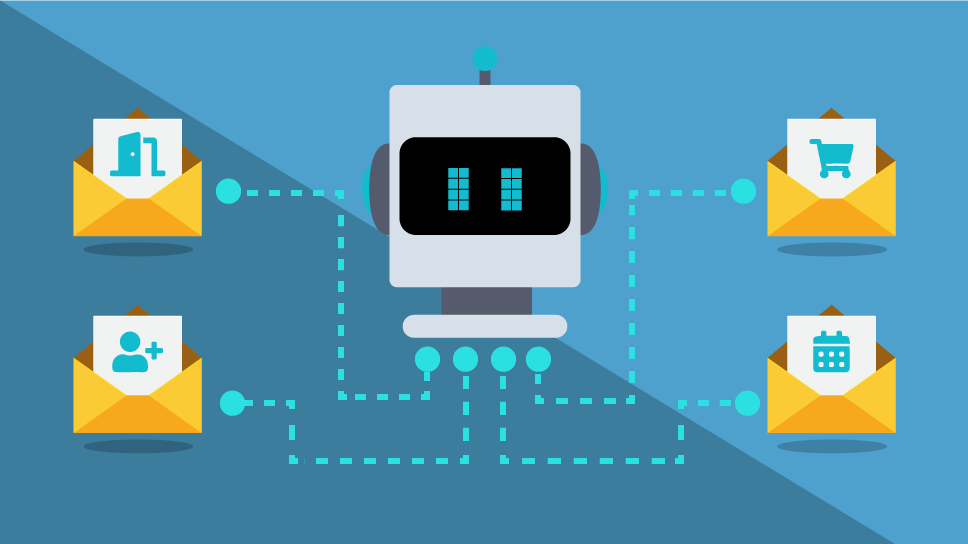
What is the mechanism of an autoresponder?
The fundamental procedure is simple to grasp, even though automated marketing platforms may grow very complex.
Four crucial components make up the majority of autoresponder systems:
1. a spark
2. A statement
3. Timely
4. A recipient
1. The Catalyst
The automation is started by the trigger.
Typical triggers include the following:
Subscribing to a newsletter
Completing an online form
Obtaining a resource for free
Purchasing an item
creating an account
Information request
abandoning a virtual shopping basket
Getting to a specific date
Becoming inactive for a particular amount of time
The system receives information from the trigger that something has occurred and that an automated answer should be started.
2. The Announcement
The substance presented following the activation of the trigger is called a message.
It might be a part of a longer sequence or a quick confirmation message.
As an example, a person may receive the following after downloading a checklist:
Email 1: The asked checklist
Email 2: Checklist Usage Tips
Common mistakes to avoid are highlighted in email 3.
Resources that are not available elsewhere
Email 5: An invitation to check out a related service or product.
The messages should have a clear goal and offer the recipient value.
3. Timeframe
Automated messages don't always need to be delivered right away.
Certain communications ought to be delivered right away, while others are more effective after a wait.
Example:
Welcome email right away.
Helpful newbie recommendations after one day.
Educational paper following three days
Product recommendation after a week
What you're trying to achieve and what the recipient anticipates determine when to send your message.
4. The Recipient
Ultimately, the system needs to be aware of the message's recipients.
Based on an individual action, or a certain set of subscribers that satisfy particular criteria, an autoresponder may interact with one person.
This renders automated communication more relevant than delivering a message to everyone.
Email vs. Autoresponder
It's simple to grasp an autoresponder by contrasting it with a standard email.
In most cases, a broadcast email, sometimes referred to as a standard marketing email, is made for a certain group of people and delivered at a precise time.
For instance, a corporation could mail its members a newsletter every Monday.
The schedule is often tied to the recipient's behavior, which distinguishes an autoresponder.
Let's say Sarah registers on Monday and David registers on Thursday.
Sarah might receive her initial message on Monday and David on Thursday if they are both participating in the same welcome sequence.
The system does not need the owner of the business to physically email on those certain dates.
As a result, autoresponders are especially helpful for companies that acquire new leads or clients on a daily basis.
Drip Campaign vs. Autoresponder
Even if they can describe slightly different things, the terms drip campaign and autoresponder are occasionally used interchangeably.
A single automatic message might be sent by an autoresponder.
For instance:
Trigger: Client buys a item
Response: Automated order confirmation
Most of the time, a drip campaign consists of several messages sent throughout a period.
For example:
Welcome email: Day 1
Educational Tip Day 3
Case study: Day 5
Product Information: Day 7
Day 10: Special deal
The distinction is not always absolute. These phrases are used differently on different marketing platforms. The most crucial idea for newcomers to understand is that both use automated communication based on predetermined guidelines.
The Advantages of Using Autoresponders
Businesses, producers, groups, and online experts can benefit from autoresponders in a number of ways.
1. Time Is Saved By Them
One of the major advantages is time savings.
Picture getting 100 new members in just one week. Without automation, someone would have to send welcome messages or other repetitive correspondence by hand.
The message can be written once and sent automatically whenever someone satisfies the trigger condition with an autoresponder.
As a result, teams are able to spend more time on strategy, customer service, product development, and other crucial tasks.
2. They Offer Quick Responses
Online conversation requires speed.
One may wonder if the registration was successful if they sign up for a resource and don't get anything back for hours or even days.
Confirmation of the action's success can come from an instant automated response.
A firm may, for instance, automatically transmit:
We have received your request.
A consumer may then be assured that the system has recorded their activity.
3. They Raise Consistency
Communication that is done manually can be unreliable.
Another employee may utilize a different message, while one may use one. Additionally, crucial information might be forgotten during hectic times.
An autoresponder sends the message in accordance with the guidelines you set.
As a result, subscribers and customers may expect a reliable experience.
4. They Help Foster Customer Relations
Communication shouldn't seem impersonal as a result of automation.
Autoresponders can assist businesses in maintaining regular contact with their target audience when communications are pertinent and helpful.
Instead of just receiving promotional communications, a new client may receive useful tips on how to use a product, for instance.
The consumer experience may become more helpful and supportive as a result.
5. They Aid Companies in Scaling
Hundreds of subscribers may be active today, with thousands more following in the future, for a little firm.
Dealing with every follow-up by hand becomes more challenging
when the audience expands.
It is possible to maintain particular communication procedures without seeing a proportionate rise in repetitive manual labor thanks to automation.
6. They Can Enhance Relevance
A generic message sent to an entire audience is frequently less pertinent than a message based on a person's behavior.
For instance, someone who downloads a beginner's handbook may be interested in educational materials pertaining to it.
Onboarding information may be required by someone who has already bought a product rather than a sales message urging them to purchase the identical item.
Businesses can use automation to deliver messages based on these discrepancies.
Many applications for autoresponders are possible. Here are some of the most frequent kinds.
Greetings Autoresponders
When someone joins an email list, a welcome autoresponder is typically delivered.
It may introduce the company, provide a promised resource, explain what to anticipate, or thank the subscriber.
Since it is the first direct contact between a company and a new subscriber, a welcome message is a fantastic way to leave a lasting impact.
Email for verification
Other typical forms of automation include confirmation messages.
They could verify:
Subscriptions to newsletters
Applications submitted
Registration of accounts
Appointment applications
Acquisitions
Downloads
The major goal is to ensure the recipient that the action was successfully accomplished.
Over a period of time, an educational lesson offers information.
For instance, a free five-day email course could be offered on a photography website.
Subscribers could get:
Day 1: Camera settings explained
Day 2: Improving your composition
Day 3: Using natural light to capture images
Steering clear of frequent photo blunders - Day 4
Day 5: Creating a basic workflow for photography
Useful information may be provided while creating expertise with this sort of autoresponder.
Automatic responses following a purchase
After a purchase, a client's relationship doesn't have to cease.
A post-purchase sequence can assist clients in understanding their purchase and extracting more worth from it.
Messages might consist of:
Confirmation of purchase
Starting a business instructions
Suggestions for Products
FAQs (Frequently Asked Questions)
Review requests
Connected proposals
Additionally, solid after-purchase communication may foster customer loyalty.
Abandoned Shopping Cart Autoresponder Messages
Online buyers Occasionally add things to their baskets but do not finish their purchases.
An automatic reminder may call attention to the incomplete acquisition.
A common sequence may begin with a straightforward reminder before going on to provide more information about the product.
These warnings must, however, be applied with caution. Overly frequent reminders could be irritating rather than helpful.
One of the major advantages is time savings.
Picture getting 100 new members in just one week. Without automation, someone would have to send welcome messages or other repetitive correspondence by hand.
The message can be written once and sent automatically whenever someone satisfies the trigger condition with an autoresponder.
As a result, teams are able to spend more time on strategy, customer service, product development, and other crucial tasks.
2. They Offer Quick Responses
Online conversation requires speed.
One may wonder if the registration was successful if they sign up for a resource and don't get anything back for hours or even days.
Confirmation of the action's success can come from an instant automated response.
A firm may, for instance, automatically transmit:
We have received your request.
A consumer may then be assured that the system has recorded their activity.
3. They Raise Consistency
Communication that is done manually can be unreliable.
Another employee may utilize a different message, while one may use one. Additionally, crucial information might be forgotten during hectic times.
An autoresponder sends the message in accordance with the guidelines you set.
As a result, subscribers and customers may expect a reliable experience.
4. They Help Foster Customer Relations
Communication shouldn't seem impersonal as a result of automation.
Autoresponders can assist businesses in maintaining regular contact with their target audience when communications are pertinent and helpful.
Instead of just receiving promotional communications, a new client may receive useful tips on how to use a product, for instance.
The consumer experience may become more helpful and supportive as a result.
5. They Aid Companies in Scaling
Hundreds of subscribers may be active today, with thousands more following in the future, for a little firm.
Dealing with every follow-up by hand becomes more challenging
when the audience expands.
It is possible to maintain particular communication procedures without seeing a proportionate rise in repetitive manual labor thanks to automation.
6. They Can Enhance Relevance
A generic message sent to an entire audience is frequently less pertinent than a message based on a person's behavior.
For instance, someone who downloads a beginner's handbook may be interested in educational materials pertaining to it.
Onboarding information may be required by someone who has already bought a product rather than a sales message urging them to purchase the identical item.
Businesses can use automation to deliver messages based on these discrepancies.
Typical Autoresponders
Many applications for autoresponders are possible. Here are some of the most frequent kinds.
Greetings Autoresponders
When someone joins an email list, a welcome autoresponder is typically delivered.
It may introduce the company, provide a promised resource, explain what to anticipate, or thank the subscriber.
Since it is the first direct contact between a company and a new subscriber, a welcome message is a fantastic way to leave a lasting impact.
Email for verification
Other typical forms of automation include confirmation messages.
They could verify:
Subscriptions to newsletters
Applications submitted
Registration of accounts
Appointment applications
Acquisitions
Downloads
The major goal is to ensure the recipient that the action was successfully accomplished.
Autoresponders for Education
Over a period of time, an educational lesson offers information.
For instance, a free five-day email course could be offered on a photography website.
Subscribers could get:
Day 1: Camera settings explained
Day 2: Improving your composition
Day 3: Using natural light to capture images
Steering clear of frequent photo blunders - Day 4
Day 5: Creating a basic workflow for photography
Useful information may be provided while creating expertise with this sort of autoresponder.
Automatic responses following a purchase
After a purchase, a client's relationship doesn't have to cease.
A post-purchase sequence can assist clients in understanding their purchase and extracting more worth from it.
Messages might consist of:
Confirmation of purchase
Starting a business instructions
Suggestions for Products
FAQs (Frequently Asked Questions)
Review requests
Connected proposals
Additionally, solid after-purchase communication may foster customer loyalty.
Abandoned Shopping Cart Autoresponder Messages
Online buyers Occasionally add things to their baskets but do not finish their purchases.
An automatic reminder may call attention to the incomplete acquisition.
A common sequence may begin with a straightforward reminder before going on to provide more information about the product.
These warnings must, however, be applied with caution. Overly frequent reminders could be irritating rather than helpful.
Autoresponders for Re-Engagement
After a certain amount of time, certain subscribers cease opening emails.
An effort to re-engage dormant users may be made through a re-engagement campaign.
Perhaps the message would inquire if they still wished to get emails or present them with a chance to update their preferences.
It is essential to respect a person's decision if they obviously don't wish to communicate any further.
Illustrative Autoresponder Samples from the Real World
Think of a few common instances to make the notion easier to grasp.
Online Course: Example #1
An effort to re-engage dormant users may be made through a re-engagement campaign.
Perhaps the message would inquire if they still wished to get emails or present them with a chance to update their preferences.
It is essential to respect a person's decision if they obviously don't wish to communicate any further.
Illustrative Autoresponder Samples from the Real World
Think of a few common instances to make the notion easier to grasp.
Online Course: Example #1
A guest registers for a free online course.
The first course is sent right away by the autoresponder.
Another lesson is learned two days later.
A few days later, the subscriber will get a new lesson.
The whole sequence was planned out beforehand.
Online Store - Example 2
The first course is sent right away by the autoresponder.
Another lesson is learned two days later.
A few days later, the subscriber will get a new lesson.
The whole sequence was planned out beforehand.
Online Store - Example 2
A client purchases a pair of sneakers.
An order confirmation is automatically sent by the system.
Another automated email provides care instructions and asks the client to leave a review after the anticipated delivery period.
The client receives beneficial communication without the store having to manually send every message.
Example 3: Business in the Service Sector
An order confirmation is automatically sent by the system.
Another automated email provides care instructions and asks the client to leave a review after the anticipated delivery period.
The client receives beneficial communication without the store having to manually send every message.
Example 3: Business in the Service Sector
An individual completes a contact form, inquiring about a particular service.
Receipt of the query is confirmed immediately by the autoresponder.
Then, when it's appropriate, the business may get in touch with you personally.
In this instance, automation does not take the place of human communication. It simply ensures that the customer is not left wondering if their message was received.
How to Construct a Strong Autoresponder
Writing countless emails and distributing them at random isn't what creating an autoresponder entails.
A clear objective should be behind a successful sequence.
step1: Set Your Objective
Receipt of the query is confirmed immediately by the autoresponder.
Then, when it's appropriate, the business may get in touch with you personally.
In this instance, automation does not take the place of human communication. It simply ensures that the customer is not left wondering if their message was received.
How to Construct a Strong Autoresponder
Writing countless emails and distributing them at random isn't what creating an autoresponder entails.
A clear objective should be behind a successful sequence.
step1: Set Your Objective
Begin by asking yourself what you want the automation to achieve.
To:
New subscribers are welcome.
Teach prospective customers.
Provide a resource
customers on board
Promote returning customers
Restore deserted carts.
Engage with inactive members again.
Deciding what messages belong in the sequence is facilitated by having a clear objective.
To:
New subscribers are welcome.
Teach prospective customers.
Provide a resource
customers on board
Promote returning customers
Restore deserted carts.
Engage with inactive members again.
Deciding what messages belong in the sequence is facilitated by having a clear objective.
Step 2: Recognize the Trigger
What action should cause the automation to begin next?
For instance:
Upon downloading my complimentary guide.
State your facts clearly. It becomes simpler to generate pertinent messages the more precisely you define the trigger.
What action should cause the automation to begin next?
For instance:
Upon downloading my complimentary guide.
State your facts clearly. It becomes simpler to generate pertinent messages the more precisely you define the trigger.
Step 3: Determine the Recipient's Needs
After doing the action, think about what the person expects.
Give them the manual if they downloaded it.
Offer confirmation and helpful subsequent steps if they bought a product.
Describe what will happen if they subscribe to a newsletter.
Don't concentrate on your sales goals; instead, start with the needs of the receiver.
Give them the manual if they downloaded it.
Offer confirmation and helpful subsequent steps if they bought a product.
Describe what will happen if they subscribe to a newsletter.
Don't concentrate on your sales goals; instead, start with the needs of the receiver.
Step 4: Schedule the sequence
Give each email a distinct role if you're composing more than one message.
For instance:
Email 1: Introduction and greetings
Email 2: Useful Details
Email 3: Common problems and their fixes
Email 4: More resources
Email 5: Relevant Product or Service
Rather than being a series of unrelated commercials, a sequence should resemble a logical progression.
Step 5: Make Your Writing Concise
For instance:
Email 1: Introduction and greetings
Email 2: Useful Details
Email 3: Common problems and their fixes
Email 4: More resources
Email 5: Relevant Product or Service
Rather than being a series of unrelated commercials, a sequence should resemble a logical progression.
Step 5: Make Your Writing Concise
Messages sent automatically should be easy to understand.
Refrain from using excessive promotional language, overly complex sentences, and unnecessary jargon.
It should be obvious what the aim of an email is right away.
Where relevant, utilize concise paragraphs, informative headlines, and a compelling call to action.
Step 6: Put Everything to the Test
Try out an autoresponder before you turn it on.
Verify:
The trigger
The email's contents
Connections
Styling
timing
Customization
Mobile appearance
Options for unsubscribing
What occurs when someone performs the required behavior?
Because a minor error in an automatic sequence may be replicated several times, testing is crucial.
Things You Shouldn't Do with Your Autoresponder
Although automation is strong, it can also lead to issues if misused.
Sending too many messages
It might quickly become annoying to get an email every few hours.
It's not necessary to keep your audience informed all the time. When there is a real reason, make an effort to send communications.
Turning Every Email Into a Sales Pitch
Subscribers may grow tired of hearing Buy now in every automated message.
A greater approach is to strike a balance between educational content, support, guidance, and helpful information.
A message that is technically correct may still be useless if it comes at the wrong time.
Think about what the recipient has recently done and what information they are most likely to require next.
disregarding individualization
Although generic communication is not necessarily bad, relevant customization might make automated messages more beneficial.
Based on your system, you might be able to customize messages with data like a subscriber's name, product purchased, interests, or prior actions.
Personalization should be genuinely beneficial and accurate rather than just being there for aesthetic reasons.
Failure to Evaluate Results
Never should you set up and forget about automation.
Regularly evaluate performance.
Depending on the platform, useful metrics might include the following:
the pace of delivery
Rate of opening
Rate of click-throughs
Conversion rate
Rate of Unsubscribe
Produced income
Progress over time
You may use these data to identify areas of your sequence that require refinement.
Refrain from using excessive promotional language, overly complex sentences, and unnecessary jargon.
It should be obvious what the aim of an email is right away.
Where relevant, utilize concise paragraphs, informative headlines, and a compelling call to action.
Step 6: Put Everything to the Test
Try out an autoresponder before you turn it on.
Verify:
The trigger
The email's contents
Connections
Styling
timing
Customization
Mobile appearance
Options for unsubscribing
What occurs when someone performs the required behavior?
Because a minor error in an automatic sequence may be replicated several times, testing is crucial.
Things You Shouldn't Do with Your Autoresponder
Although automation is strong, it can also lead to issues if misused.
Sending too many messages
It might quickly become annoying to get an email every few hours.
It's not necessary to keep your audience informed all the time. When there is a real reason, make an effort to send communications.
Turning Every Email Into a Sales Pitch
Subscribers may grow tired of hearing Buy now in every automated message.
A greater approach is to strike a balance between educational content, support, guidance, and helpful information.
Ignoring the schedule
A message that is technically correct may still be useless if it comes at the wrong time.
Think about what the recipient has recently done and what information they are most likely to require next.
disregarding individualization
Although generic communication is not necessarily bad, relevant customization might make automated messages more beneficial.
Based on your system, you might be able to customize messages with data like a subscriber's name, product purchased, interests, or prior actions.
Personalization should be genuinely beneficial and accurate rather than just being there for aesthetic reasons.
Failure to Evaluate Results
Never should you set up and forget about automation.
Regularly evaluate performance.
Depending on the platform, useful metrics might include the following:
the pace of delivery
Rate of opening
Rate of click-throughs
Conversion rate
Rate of Unsubscribe
Produced income
Progress over time
You may use these data to identify areas of your sequence that require refinement.
When Should You Utilize an Autoresponder?
Autoresponders are particularly helpful when a predictable event requires repeated same-type communication.
They might be a smart decision when:
Many new members are added to your list.
Customers require prompt confirmation.
New users need to be onboarded.
You provide educational resources.
Your company has a sales process that can be repeated.
Follow-up information is required by clients.
Over time, leads must be fostered.
Yet, automation should not be substituted for human communication in situations needing empathy, judgment, or comprehensive problem-solving.
For example, a customer support query may be confirmed by an automated message, but a complex complaint might still need a human to address it.
Is Email the Only Medium for Autoresponders?
Although automated responses can be used on other communication platforms, email is arguably the most common use of them.
Automation can be used in a variety of areas, depending on the equipment a company employs:
Email Address
Texting
Notifications for the website
Support Systems for Customers
Platforms for messaging
Notifications for apps
The basic principle is still the same: an event takes place, a rule is triggered, and an automatic reaction is provided.
They might be a smart decision when:
Many new members are added to your list.
Customers require prompt confirmation.
New users need to be onboarded.
You provide educational resources.
Your company has a sales process that can be repeated.
Follow-up information is required by clients.
Over time, leads must be fostered.
Yet, automation should not be substituted for human communication in situations needing empathy, judgment, or comprehensive problem-solving.
For example, a customer support query may be confirmed by an automated message, but a complex complaint might still need a human to address it.
Is Email the Only Medium for Autoresponders?
No.
Although automated responses can be used on other communication platforms, email is arguably the most common use of them.
Automation can be used in a variety of areas, depending on the equipment a company employs:
Email Address
Texting
Notifications for the website
Support Systems for Customers
Platforms for messaging
Notifications for apps
The basic principle is still the same: an event takes place, a rule is triggered, and an automatic reaction is provided.
Commonly Asked Autoresponder Questions
Do an autoresponder and an automated email have the same purpose?
Not always.
Automated communication includes autoresponders. It usually sends a pre-established answer when a certain trigger is encountered.
Many different types of email automation can be covered by the more general phrase "automated email. "
Is it necessary for me to possess technical expertise in order to utilize an autoresponder?
Generally, no.
Users may create triggers, messages, delays, and sequences without writing any code thanks to the visual interfaces offered by a number of contemporary email marketing and automation platforms.
Basic autoresponders may generally be made by beginners with relatively little experience, although more advanced automation may call for further technical expertise.
How many emails should an autoresponder sequence include?
There is no universal number.
One email may be enough to confirm something.
An educational program could have many more communications than a welcome sequence.
The proper length is determined by the sequence's aim and the recipient's information needs.
Is it possible for autoresponders to boost sales?
If utilized correctly, they can help boost sales.
For instance, an autoresponder can educate potential consumers, follow up after an interaction, recommend related products, or aid customers in comprehending an existing purchase.
However, automation alone does not ensure sales. The information must be of good quality, appropriate, timely, and practical.
Are autoresponders beneficial for little businesses?
Yeah.
Small companies frequently have a small workforce and little time, which makes repeated communication exceedingly costly.
While the owner concentrates on customers and other crucial tasks, an autoresponder can handle everyday communications.
Concluding Remarks
In essence, an autoresponder is a system that allows automated communication to occur upon a particular event.
The idea is straightforward, but it may be applied in many ways.
A single automated message can acknowledge a customer inquiry, confirm a purchase, provide a requested resource, or greet a new subscriber. By informing prospects, onboarding customers, promoting engagement, and sustaining relationships over time, a thoughtfully planned series can accomplish more.
Automation isn't the only benefit. It is the capacity to provide the appropriate kind of communication at the right time without requiring someone to manually perform the same chore each time.
Keeping things easy is the greatest approach to begin for novices. Before going live, select one clear objective, identify one meaningful trigger, create helpful material, determine appropriate timing, and test the full process.
It's important to keep in mind that automation should prioritize the audience. An autoresponder shouldn't just be there to send additional emails. People receiving it should be able to communicate more quickly, effectively, and conveniently.
Autoresponders may be a useful component of several digital communication strategies, including email marketing, customer service, lead nurturing, ecommerce, and online education, if they are carefully planned.
The idea is straightforward, but it may be applied in many ways.
A single automated message can acknowledge a customer inquiry, confirm a purchase, provide a requested resource, or greet a new subscriber. By informing prospects, onboarding customers, promoting engagement, and sustaining relationships over time, a thoughtfully planned series can accomplish more.
Automation isn't the only benefit. It is the capacity to provide the appropriate kind of communication at the right time without requiring someone to manually perform the same chore each time.
Keeping things easy is the greatest approach to begin for novices. Before going live, select one clear objective, identify one meaningful trigger, create helpful material, determine appropriate timing, and test the full process.
It's important to keep in mind that automation should prioritize the audience. An autoresponder shouldn't just be there to send additional emails. People receiving it should be able to communicate more quickly, effectively, and conveniently.
Autoresponders may be a useful component of several digital communication strategies, including email marketing, customer service, lead nurturing, ecommerce, and online education, if they are carefully planned.

